Rudolf Diesel: The Inventor Behind the Heavy-Duty Diesel Engine
How Rudolf Diesel's invention created the compression-ignition engine — and the foundation of the modern diesel industry: the history, the timeline, and why dependable diesel parts still matter.
Before diesel engines powered semi-trucks, construction equipment, farm machines, buses, ships, and generators, there was one man with a better idea: Rudolf Diesel.
Rudolf Diesel was born on March 18, 1858, in Paris, France, and became one of the most important engineers in modern transportation history. His work led to the invention of the compression-ignition engine, the engine type that still powers much of the heavy-duty world today.
For anyone who works around trucks, engines, parts counters, or repair bays, Diesel's invention was more than a piece of history. It created the foundation for the modern diesel industry.
The Problem Rudolf Diesel Wanted to Solve
In the late 1800s, steam engines were common, but they were bulky, inefficient, and limited. Rudolf Diesel believed there had to be a better way to turn fuel into usable power.
His goal was to build an engine that used fuel more efficiently by creating heat through air compression instead of relying on an outside spark. That idea became the heart of the diesel engine.
A diesel engine works differently than a gasoline engine. Instead of using spark plugs to ignite a fuel-air mixture, a diesel engine compresses air until it becomes extremely hot, then injects fuel into that hot compressed air. The fuel ignites from the heat of compression. This is called compression ignition.
That basic principle is still what makes diesel engines known for torque, durability, and fuel efficiency.
When Was the Diesel Engine Invented?
Rudolf Diesel developed his engine concept in the early 1890s. The path from patent to a practical, commercially successful engine took the better part of a decade:
| Year | Event |
|---|---|
| 1892 | Diesel receives a German development patent for his compression-ignition concept. |
| 1893 | He publishes his design, laying out the theory behind the engine. |
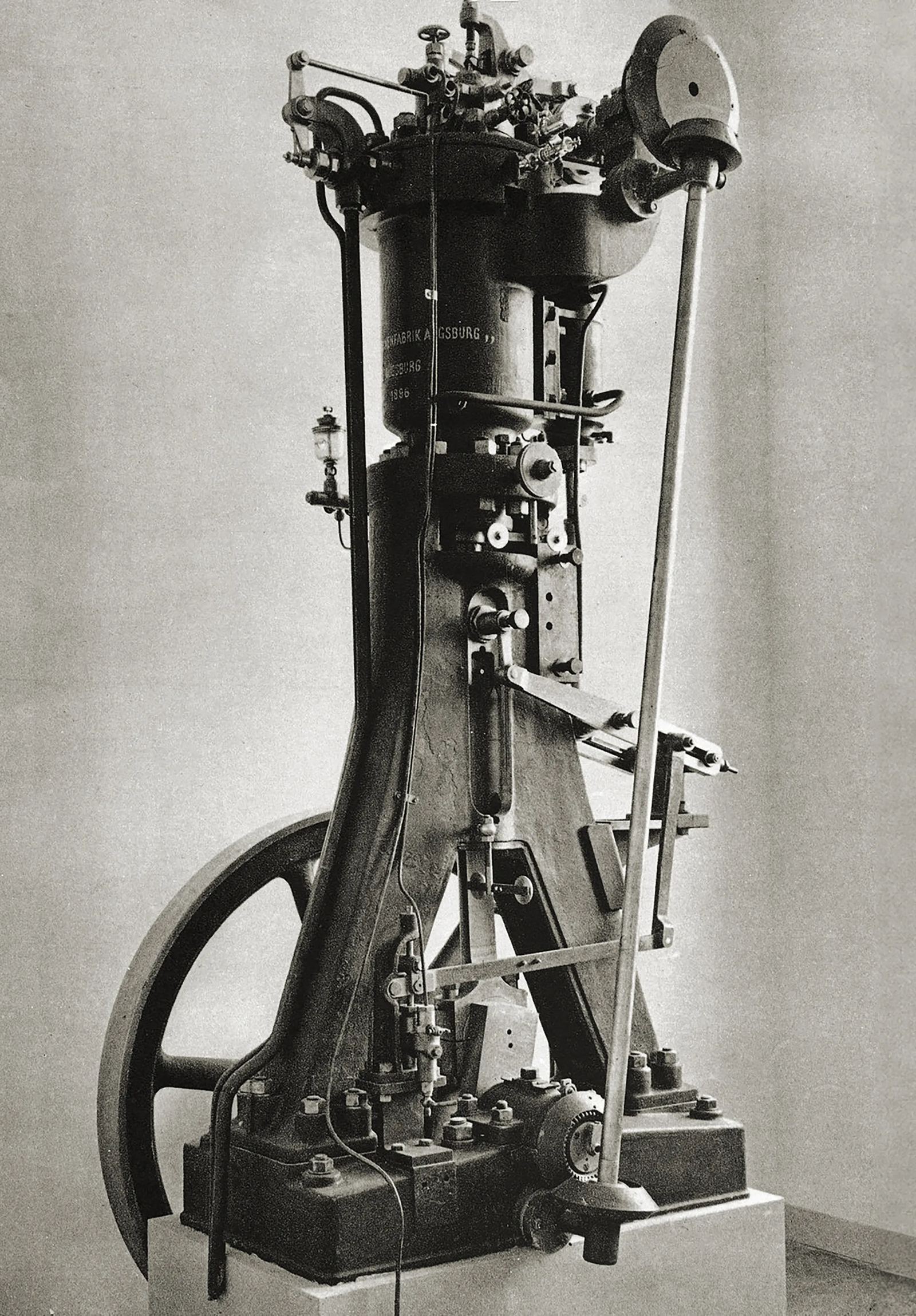
| 1897 | After years of testing and refinement, he builds the first commercially successful diesel engine. |
That timeline matters because the diesel engine did not become successful overnight. Like most major mechanical breakthroughs, it took years of testing, failure, redesign, and improvement before the engine became practical.
Anyone who has worked on heavy-duty diesel engines knows that same reality still applies today: power and reliability come from details. Compression, fuel delivery, airflow, cooling, sealing, machining, and quality parts all matter.
Why Diesel Engines Became So Important
Diesel engines became popular because they offered major advantages for hard-working applications:
- They produced strong low-end torque.
- They used fuel efficiently.
- They were built for long service life.
- They could handle heavy loads.
- They became a natural fit for trucks, industrial machines, marine equipment, agriculture, and generators.
Diesel engines are among the most efficient internal combustion powerplants, and that durability and reliability is a big part of why they became the backbone of industries that cannot afford downtime.
From Rudolf Diesel's First Engine to Today's Heavy-Duty Trucks
Rudolf Diesel probably could not have imagined today's electronically controlled, turbocharged, high-pressure fuel diesel engines. Modern heavy-duty engines are far more advanced than the early designs, but the core idea is still the same: compress air, inject fuel, create power.
Today, diesel engines are found in platforms like:
- Cummins ISX and X15
- Caterpillar C15 and C13
- Detroit Series 60 and DD15
- PACCAR MX engines
- Mack and Volvo heavy-duty engines
- International and Navistar applications
These engines work hard, and when they fail, the truck stops making money. That is why quality replacement parts matter.
At JAK'S Diesel, we focus on parts that keep heavy-duty diesel engines working — including cylinder heads, gasket kits, injectors, turbos, inframe components, exhaust manifolds, head bolts, and other engine parts for serious diesel applications.
The Lesson Diesel Left Behind: Efficiency Only Works When Parts Hold Up
Rudolf Diesel's invention was built around efficiency, compression, and mechanical strength. Those same ideas still matter in every diesel repair today. A diesel engine depends on:
- Proper compression
- Correct fuel delivery
- Strong sealing surfaces
- Reliable cooling
- Quality valves and cylinder heads
- Accurate cross-reference parts
- The right gasket and hardware combinations
A cheap part that fails early can cost far more than it saves. In heavy-duty diesel work, downtime is expensive. The right part, installed the first time, protects the engine and the customer's schedule.
That is why JAK'S Diesel focuses on helping customers find the correct part by application, engine platform, OEM number, and cross-reference — not just by guessing from a picture or chasing the lowest price.
Rudolf Diesel's Mysterious Death
Rudolf Diesel's life ended in mystery. On September 29, 1913, he disappeared while crossing the English Channel on a steamship. His body was later reported recovered at sea, but the exact circumstances of his death remain debated.
Some theories point to accident, some to suicide, and others to conspiracy because of the strategic importance of diesel engine technology before World War I. What is known for certain is that Diesel's invention outlived him and changed the world.
Why Rudolf Diesel Still Matters to Truck Owners Today
More than 100 years later, Rudolf Diesel's name is still stamped into the way the world moves freight. Every time a semi pulls a grade, a generator keeps power on, a piece of equipment moves dirt, or a fleet truck gets back on the road after a rebuild, it is part of the legacy Diesel started.
For truck owners, fleets, and repair shops, that legacy comes down to one thing: dependable diesel power. And dependable diesel power depends on dependable parts.
Whether you are rebuilding a Caterpillar, servicing a Cummins, sourcing Detroit parts, or trying to cross-reference an OEM number, JAK'S Diesel helps you get the right heavy-duty diesel parts without dealership delays or guesswork.
Need Heavy-Duty Diesel Engine Parts?
JAK'S Diesel supplies diesel engine parts for owner-operators, fleets, and independent repair shops. Call or text us today, or request a quote online, and we'll help you find the right part for your engine. We can help with:
- Cylinder heads
- Head gasket kits
- Inframe kits
- Injectors
- Turbos
- Exhaust manifolds
- Head bolts and hardware
- Cross-reference part lookup
Call or text a specialist: (720) 445-6249